
The Content-Led Demand Gen Playbook You’re Searching For
Content Strategy, Marketing, and Demand Gen Framework that Works


Have you been challenged with scaling marketing income?
Create and optimize content that helps you hit your target for FY25.
Note from the Author
So your company won a (or another?) round of funding, and you've got more $ to invest in marketing campaigns.
CHA CHING! Grab your team and go celebrate—head out to dinner or pop some champagne. Then block your calendar for the next day and get to strategizing. Because if you're planning to funnel a large chunk of that money into paid channels alone, you’ll be shooting yourself in the foot.
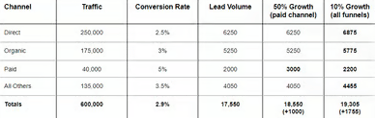
While paid channels are great for generating quick results, they aren't the most effective at helping you achieve scale. Funnel Envy, after analyzing data from two of their high-growth clients, found that a 10% growth in revenue from all digital channels outpaces a 50% growth in revenue from paid channels alone by a significant margin.
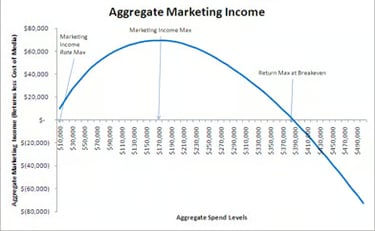
Why? Because Search Engine Land crunched the numbers and found that once you hit the inflection point on paid marketing spend, your margins get smaller and smaller—until it dives into the negatives.
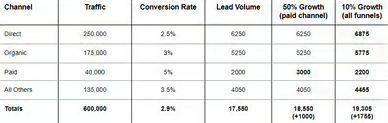
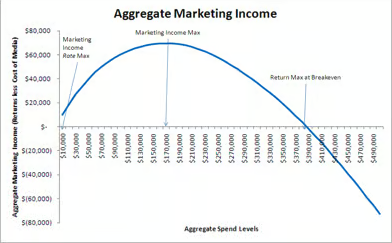
That means that while you still might grow your lead volume exponentially, your Customer Acquisition Cost (CAC) will also grow. That also means that your marketing income i.e. revenue generated will drop proportionally.So if you shouldn't focus on paid channels alone, what should you do?
Redirect your focus on improving website conversions from all digital channels.
How do you do that?
By combining punchy copy and retable content with an effective channel strategy.
That places a big chunk of the onus on your content strategy and marketing planning.
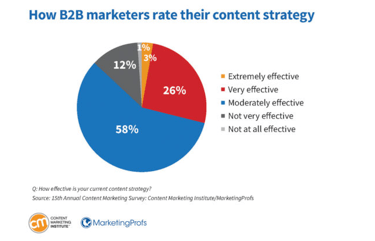
Yet, when the Content Marketing Institute (CMI) in collaboration with MarketingProfs conducted their survey for 2025, they found that 58% of content folks said that their strategy was only moderately effective.

Why is that? The same survey lists a few reasons:
Lack of clear goals.
Not tied to their customers’ journey.

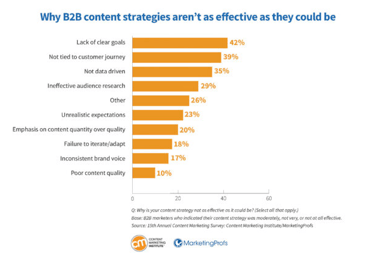
Not data-driven.
Ineffective audience research. expectations.
Emphasis on quantity over quality.
Failure to iterate.
Inconsistency in brand voice.
Poor quality of content.
If you want to avoid the same pitfalls and beat the odds, here's what you need to do.
First, make your personas actionable.
Second, deconstruct your customers' journey.
Then, bring consistency to your messaging.
Next, design an effective content and channel strategy that aligns with your customers’ journey.
Finally, operationalize iteration and implement improvements.
Applying even a single step from this list will give you a boost in lead volume. However, if you want to achieve scale and make it sustainable, you’ll need to implement every step in the specified order.
Ready to get to work? Let’s begin then.
How to make your personas actionable
29% of content folks who participated in the CMI survey say their strategy was impacted by ineffective audience research. Wouldn't you rather be among the 71%?


What does your persona look like? Is it a collection of:
demographics,
communication & tech preferences,
a line about their role & responsibilities,
a few pain points,
and maybe a line on messaging?
Frankly, that's not a bad place to start, but a fair chunk of it is educated guesswork you most likely gathered from sales folks. And it provides you very little data-driven guidance while designing your strategy.
So how do you make it actionable? By embracing a process that brings the qualitative and quantitative methods of analysis together.
Below are the steps to follow.


Build a list of your ICP
Strategic action
Start with your CRM data on existing customers. You're looking for customers who have:
stayed with you a while,
consistently reported gaining value from their engagement with you,
have expanded the list of your services or product features they use,
or have upgraded their spend.
Feel free to add any other filter that makes sense for your unique needs. Just remember that it should lead you to customers that you want more of.
This lays the foundation for applying quantitative analysis—bringing a data-driven mindset to the process.
Organization action
Plop that list onto a sheet. Next to it add columns for industry, headcount, and the product feature or service they are currently using.
Collaborate with sales and other customer facing teams
Set up organization action
In the next two columns, you list your sales representative’s name and contact details. In the following two columns, add the customer success representative’s name and contact information for each customer. If you have other teams that connect with them on a regular basis, add their info too.
The next step is to schedule calls with them. To keep the time spent on each call reasonable yet efficient, try and cover all the details you need for every customer that an individual has handled or continues to handle on one call.
Strategic action
What you need from these calls is to understand the elements that won over the customer from your company’s point of view. The key to gathering this on one call lies in getting folks to prep beforehand.
Here's what your message needs to convey.
A challenge they've been facing, and your intention to create a program/campaign that might help ease their pain.
A line or two about how you plan to do it.
A list of questions that you need answered by them to make it happen.
Share with them the questions you plan to ask your customers and ask for details they might have gathered during sales or other calls that might be pertinent.
Follow-up organization action
Add one more column where you can list the links to your call notes for each customer. Finally, add two columns that will hold the customer name and contact info.
Talk to your customers
Organization action
How long is your list? How many people do you have on this project, and what is their bandwidth? The answers to these questions will help you figure out if you want to jump on a call with your customers or conduct a survey.
Strategic action
Ask them the following questions.
How are you using [product/service] day-to-day?
When did you start using [product/service]?
With this timeline in mind, tell me a little about life before [product/service]? What were you using before? If it was a combination, what were they?
Tell me about the moment you realized your [old product/service] wasn’t cutting it anymore? What compelled you to look for something different?
Where did you go to look for new solutions? Did you try anything else before [product/service]?
How did you find out about [product/service]?
Why did you decide to choose [product/service] over the others? Can you recall anything that stood out to you?
When you signed up for [product/service], what happened that made you certain that it was the right solution for you?
Now that you have [product/service], what is the number one thing that you’re able to do that you weren’t able to do before?
What do you wish [product/service] did that it doesn’t do today?
If you need to add a question or edit one to suit your specific needs, do so. Just make sure that they’re open ended so you’re giving your customers the opportunity to speak in their own words.

Uncover their priorities or Jobs-to-be-Done (JTBD)
Here you apply the qualitative analysis to the data you collected by asking these questions. This will bring your customers’ JTBD into focus—and will look like When I [Struggle] Help me [Motivation] So I can [Desired Outcome].
You build it using the format below.
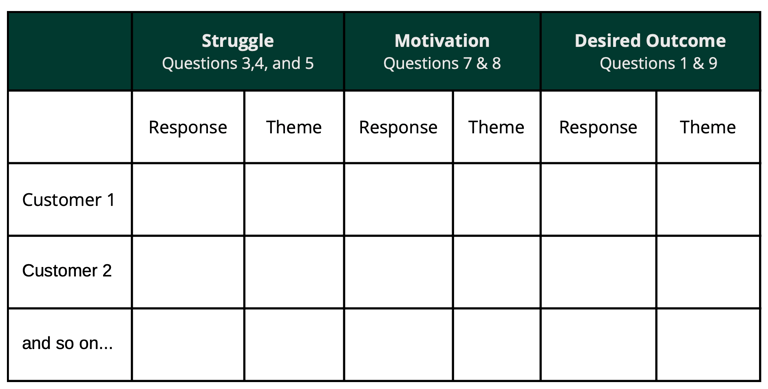
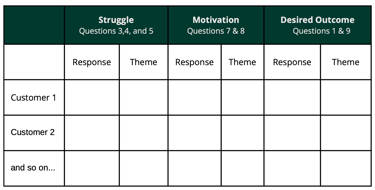
Filter the top three themes that come up and build the JTBD for each of them. Each JTBD you create is a persona. This is the first step to making your personas actionable. It enables you to prioritize based on first-party data.
Then, we expand our understanding of the top three personas by adding data on:
Search habits (keywords and forum engagement)
Website visited
Affinity to social media platforms
The content topics they find helpful
Now you have an actionable persona that gives you:
The exact words your audience uses to describe their struggles, what motivates them, and what makes them act.
Where and how they look for solutions i.e. the precise digital channels they use.
What topics they find helpful at each phase.
The Outcome
How to deconstruct your customers’ journey
42% of content professionals who responded to CMI’s survey point to a lack of clear goals as the cause for their strategy's ineffectiveness. Another 39% directly tie it to its lack of alignment with their customers' journey. You wouldn’t benefit from falling in either category.
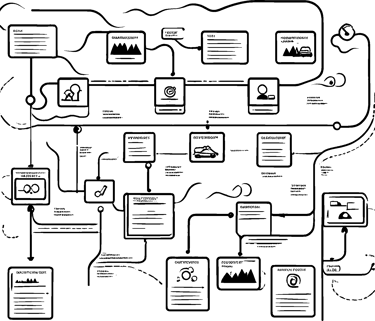
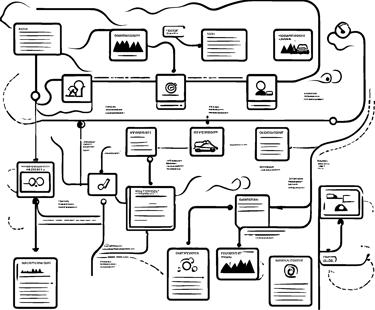
With an actionable persona in hand, the next step to scaling marketing income is aligning your efforts with the actions your customers take towards achieving their goals. For that, you must take into account every emotion that drives them to action and ultimately helps them reach their desired outcome.
Not only does it allow you to align with your customers’ journey, it also sets clear goals for you to aim for.
As we've already established while building our personas, it's the struggle that creates the need for a better way to do things. Therefore, it's logical to assume that that's where their journey begins too. Their entire journey, however, consists of two additional broad phases.
Evaluation: When your customers assess if what you have to offer can help them achieve their desired outcome.
Growth: When your customers' desired outcomes evolve as a result of the success they've experienced.
Within each of these phases, your customers will hit a few milestones that allow them to move on to the next phase. These milestones are the precise touchpoints where you need to make a positive impact to move the needle in your favor.
How do you identify these milestones? By recognizing when your customers' emotions shift along the way.
The below table gives you the technique to uncover these feelings.
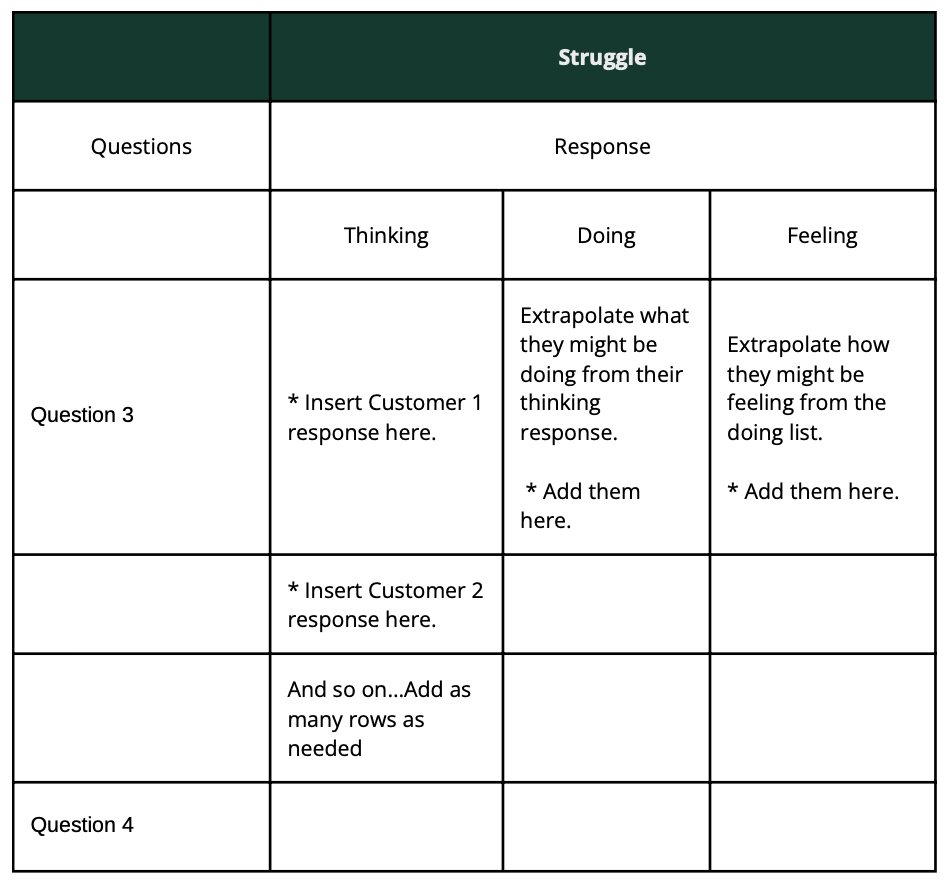

Question 3, 4, 5, and 6 from the customer interview/survey correspond to the struggle phase. Questions 7 and 8 to the evaluation phase—and questions 1 and 9 to the growth phase. Repeat the same process as above for the evaluation and growth phase too. Then put it all together in a single table.
Once you’re done recognizing your customers’ feelings from their responses, format your deconstructed journey as below. Organization and presentation makes a world of difference when you’re working with so much data.
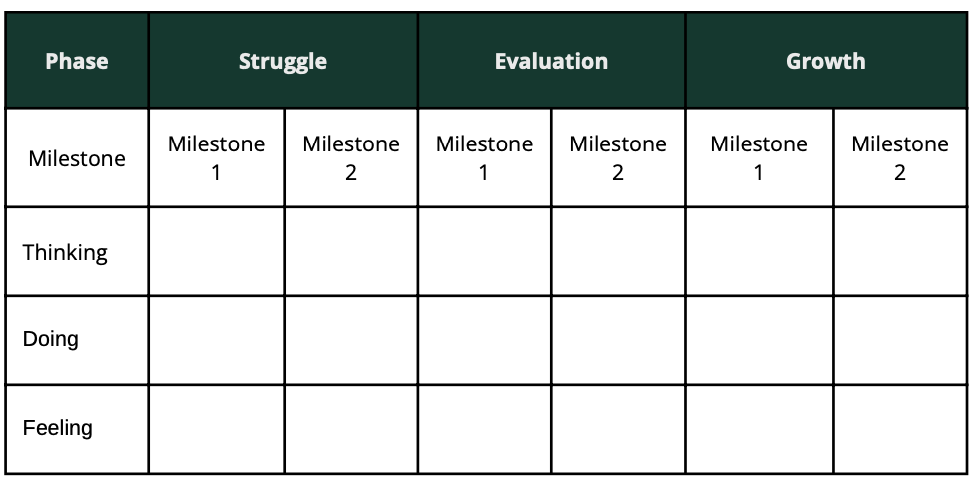
Typically the milestones in the struggle phase break down into problem and interest. The milestones within the evaluation and growth can range from two to four depending on the complexities of your customers' needs. With the responses aligned by feelings, you can now name each milestone based on the action they enable.
Now you have answers to important questions that will help you build an effective content and channel strategy.
How many touchpoints(= milestones) you need to create.
How you need to make them feel at each touchpoint to drive positive action.
The Outcome
How to bring consistency to your messaging
17% of content professionals who responded to CMI hold an inconsistent brand voice responsible for the ineffectiveness of their content strategy.
This might seem like an insignificant percentage, but it makes a disproportionately significant impact as its effects are felt after you spend a good chunk of money and put in a good deal of effort.


As the age old advertising adage goes… Say it 7 times. A study conducted by Hawkins, Hoch, and Meyers-Levy proves that repetition in advertising can make people feel more comfortable with a brand. And we all know that comfort breeds trust. This is where consistency in messaging i. e. how you can help them and your brand voice comes in.
To ensure that the message relays exactly what your customers need, make sure that use the data you've collected:
on the language they use to convey their struggles, motivators, and desired outcomes,
the topics they find helpful,
the milestones they need to hit,
and the emotions that dictate them.
Parallely, keep your brand guidelines handy to ensure that your brand voice doesn't get left behind.
While the remaining data points are fairly straightforward to apply, how do you ensure that the emotional data points fit in right where they should?
By making sure that you present your messaging in the form of that story. And to ensure your customers' resonate with it, make them the hero that overcomes the odds with a little guidance from you—their wise guide.
Follow the breakdown below and you’ll hit the right mix.

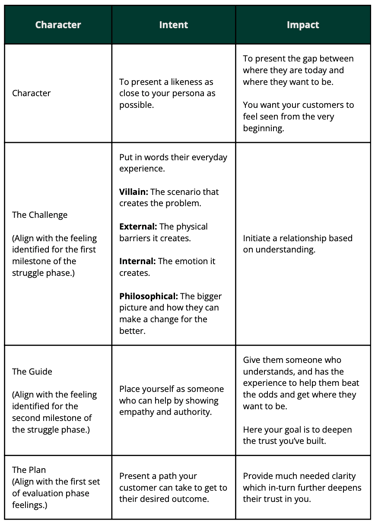
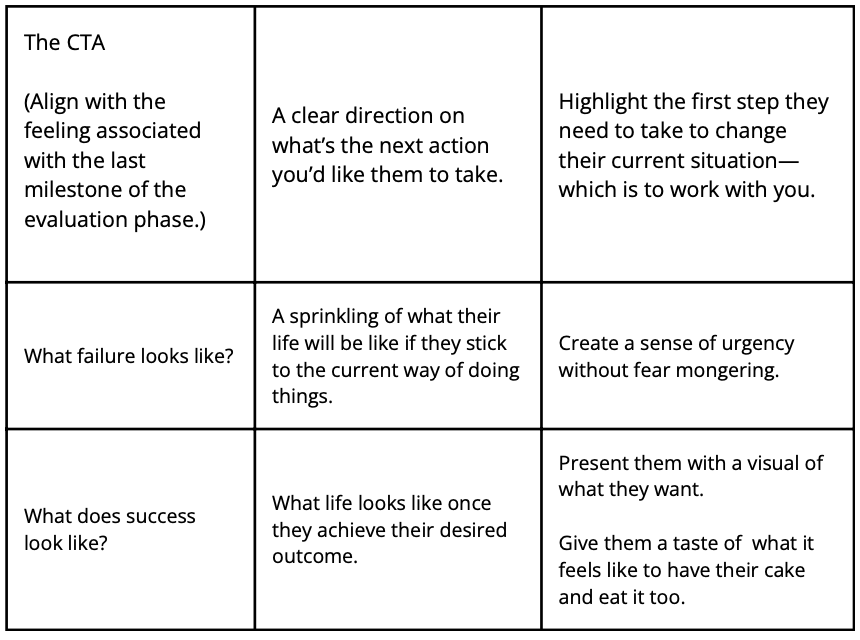
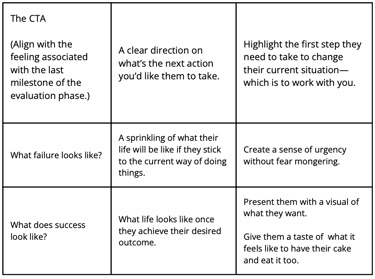
You’ve created a clear guide for everyone on the team that outlines the tone, language, and emotional response that you as an organization are looking to create. Et` Voila! Consistency.
The Outcome
How to design an effective content and channel strategy
Wouldn’t you rather be among the 12% that reported that their content strategy is very effective to the folks at CMI? Or the 3% that say their strategy is extremely effective?
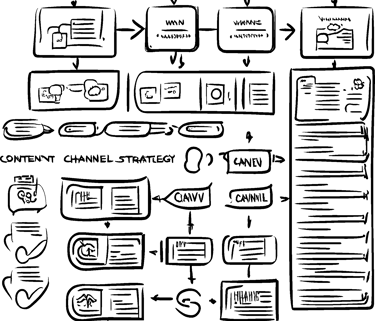

Well, this is how you join them. You start with the list of milestones you identified while deconstructing your customers’ journey and then layer in data points to build your demand generation program.


KPIs help you monitor and report on the performance of your program. You want to identify one trackable metric for each milestone.
You have a content and customer-led demand gen program designed to engage them with an experience that converts. And not a handful of marketing campaigns that may or may not work.
The Outcome
How to operationalize iteration and implement improvements
35% of content folks that responded to CMI say their strategies aren’t data-driven. Another 18% say that their failure to iterate has had a negative impact on their strategy.
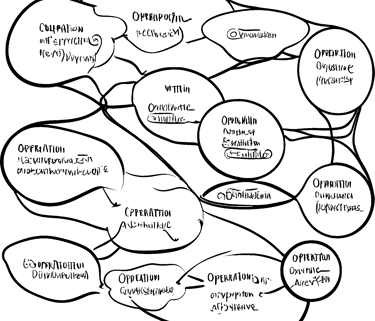

Having a plan is a brilliant start. But if you aren’t prepared to adapt in real time to changing market conditions, scaling income will remain on your wish list. What you need is a formalized process that lets you remain true to your customer needs while iterating on your touchpoints and distribution plans.
Data makes up the first part of it.
The second is the process that operationalizes it.
You begin by building a dashboard that helps you and your team access the KPIs that matter easily.
Below is what the overview of the dashboard should look like. The following sections should contain the supporting metrics that will help you dive deeper into the performance of the leading indicators.
Supporting metrics are the ones that help you monitor the performance of each digital channel like CTR or CPC for paid ads, or open rate and CTR for emails, etc. These metrics help to take a data-driven approach to planning A/B tests and iterating.
With the data element covered, let’s look into the process that allows you to operationalize data-driven iteration.
First, you need your team to understand why these metrics matter. Start by familiarising them with how you collected first-party customer data, why, and what you did with it. Share with them the personas and customer journeys you built using the data.
Second, share with them how you used these insights to define your strategy for the financial year.
Then, ensure that all the quarterly plans devised, for the team as a whole and each individual, stems from customer data.
Next, integrate the sharing of how each touchpoint is performing during your weekly team meetings and ensure that the team member who owns them has a voice to present learnings.
Finally, dedicate time at the end of each meeting where a successful experiment can be nominated to be set as the live update. This gives you the ability to make quick calls about which experiments to implement as a live update.
Lagging indicators are the numbers that your leadership is interested in like the Annual Recurring Revenue (ARR)/Monthly Recurring Revenue (MRR), Customer Acquisition Cost (CAC), Customer Lifetime Value (CLV), and more.
Leading indicators are the metrics you identified as the best way to measure the performance of your touchpoints. These metrics allow you to identify which touchpoints you need to prioritize for testing and improvements.
Lagging indicators
Leading indicators
You now have the key to making data-driven action—not just decision-making— a part of your team’s DNA.
The Outcome
Closing Thoughts
As annoying as it is to read or hear the words ‘ever evolving’ or ‘paradigm shift’ in the context of customer behavior, we can’t ignore the fact that there has been a dramatic change. Neither can we ignore the fact that it was only the beginning, and the next five years will hold a lot more surprises for us.
If you want to continue growing, putting your customers at the center of every little thing your company does is the logical thing to do.
This guide walks you through the techniques and processes you need to put your customers at the core of all things marketing. It will help you get a head start and keep pace in your journey towards the end goal of scaling your marketing income.
Bon Voyage!
P.S. I want to thank Georgiana Landi & Clair Suellentrop from Forget the Funnel, and Donald Miller of BrandStory for sharing the processes and insights with the world. I’ve leaned on their methodology quite heavily throughout my career.